Understanding AI Inference and Its Significance
In the rapidly evolving realm of artificial intelligence, AI inference has emerged as a core function that enables AI models to provide meaningful outputs based on their learned data. This essential process is not only pivotal for the functionality of AI applications but also holds significant implications for the broader AI Token Economy. As organizations strive for enhanced efficiencies and innovative solutions, understanding AI inference becomes crucial for developers, data scientists, and businesses alike.
What is AI Inference?
AI inference refers to the process by which a trained AI model generates predictions or conclusions based on new, unseen data. This occurs after the model has undergone a phase of training, where it learns patterns from a large dataset. Essentially, inference is the final step in the AI lifecycle, transforming theoretical knowledge into actionable insights. For instance, when a user inputs a query into a natural language processing system, the model analyzes the input tokens, processes them through its learned algorithms, and produces output tokens that represent the answer.
The Importance of AI Inference in Modern Applications
AI inference plays a vital role in diverse industries, including healthcare, finance, retail, and autonomous systems. Its significance stems from its ability to handle real-time data analysis, enabling businesses to make informed decisions instantly. For example, in the healthcare sector, AI inference is utilized to diagnose diseases from medical images with remarkable accuracy. In retail, companies leverage inference to personalize shopping experiences, predicting consumer behavior based on previous purchases.
Common Misconceptions About AI Inference
Despite its critical role, several misconceptions about AI inference persist. One common misunderstanding is the belief that inference and training are synonymous. However, while training involves creating the model and enhancing its capabilities, inference is purely about applying this model to generate outputs. Additionally, some people presume that inference requires extensive computational power similar to what is needed for training, which is not always the case.
How AI Inference Works: The Underlying Technology
AI Models and Their Role in Inference
At the heart of AI inference are machine learning models, which can vary significantly based on their architecture—such as neural networks, decision trees, or support vector machines. These models are trained on large datasets to recognize patterns and make accurate predictions. For instance, a convolutional neural network (CNN) is adept at processing image data, while recurrent neural networks (RNNs) excel in sequential data analysis, such as time series or natural language.
The Connection Between AI Inference and GPU Technology
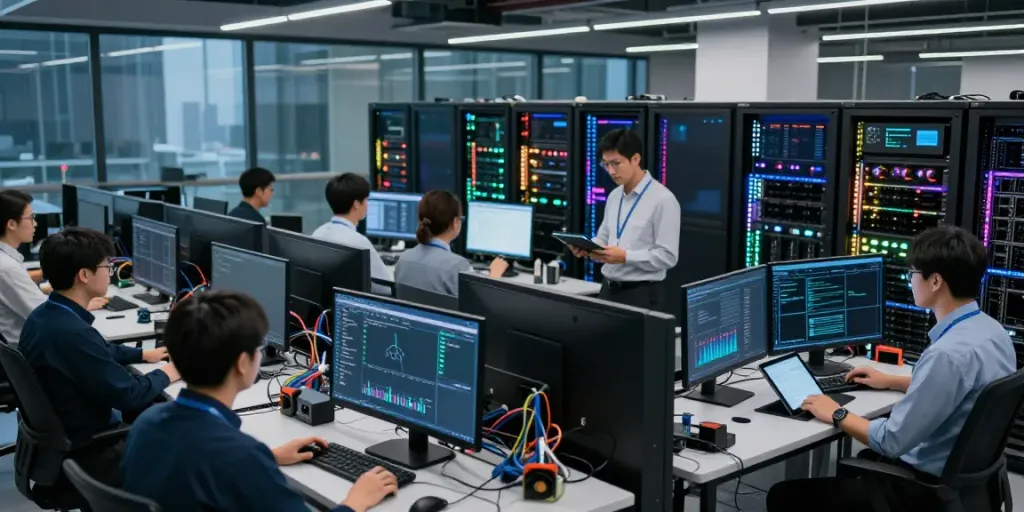
Graphics Processing Units (GPUs) are critical to the performance of AI models, particularly during inference. Unlike Central Processing Units (CPUs), GPUs can handle thousands of threads simultaneously, making them ideal for the parallel processing requirements of AI. By leveraging GPUs, AI systems can perform inference tasks faster and more efficiently, thus providing timely outputs crucial for applications like autonomous driving or real-time fraud detection.
Understanding Token-Metered AI Inference
Token-metered AI inference introduces a new dimension to how AI services are billed and utilized. In this model, AI workload usage is measured in tokens, akin to kilowatt-hours in electricity consumption. Each inquiry made in an AI system is broken down into input tokens processed by the infrastructure, leading to output tokens that signify the results. This token-based approach enables a transparent and efficient billing mechanism, encouraging users to optimize their AI usage.
Choosing the Right AI Inference Power Plan
Overview of Available Power Plans
When participating in AI infrastructure, selecting an appropriate power plan is essential. Various plans offer different levels of support based on users' needs and budget constraints. For instance, basic plans may provide core access to necessary resources, while more advanced plans cater to enterprises requiring enhanced power efficiency and scalability. Evaluating these options can significantly enhance an organization's ability to scale its AI capabilities effectively.
Evaluating Your AI Inference Needs and Goals
Before committing to a power plan, it's essential to assess your organization’s specific AI inference needs. Consider factors such as the volume of data to be processed, the complexity of the AI models in operation, and the expected response times. Identifying these needs allows organizations to make informed decisions, ensuring they choose a plan that aligns with both their operational requirements and strategic objectives.
Assessing Cost vs. Value in Power Plans
Cost is often a significant factor when selecting a power plan, but it’s crucial to evaluate the value that each plan offers. Lower-cost options might seem attractive, but they may not provide sufficient power or flexibility to meet growing demands. Conversely, investing in a premium plan could yield higher returns through improved performance and efficiency in AI operations, making it a worthwhile expenditure in the long run.
Maximizing Your Benefits from AI Inference
Strategies for Optimizing AI Inference Performance
To maximize the benefits derived from AI inference, organizations should implement several optimization strategies. These may include fine-tuning AI models to enhance accuracy, selecting the right GPU configurations to balance cost and performance, and leveraging batch processing to handle multiple requests simultaneously. Regular performance assessments can also help identify areas for improvement, ensuring that AI systems remain robust and efficient.
Measuring Success in AI Inference
Establishing key performance indicators (KPIs) is vital for measuring the success of AI inference initiatives. Metrics might include inference speed, accuracy rates, and user satisfaction scores. By continuously monitoring these indicators, organizations can gain valuable insights into the effectiveness of their AI models and make necessary adjustments to optimize performance.
Real-World Case Studies and Success Stories
Numerous organizations have successfully harnessed AI inference to achieve significant business outcomes. For instance, a major retailer utilized AI inference to enhance its inventory management, reducing costs and improving customer satisfaction. Similarly, in the financial sector, an AI-driven algorithm helped identify fraudulent transactions in real time, significantly lowering operational losses. These examples illustrate the transformative potential of AI inference across various industries.
Future Trends in AI Inference: What's Next?
Emerging Technologies Impacting AI Inference
The landscape of AI inference is continually evolving, influenced by advancements in technologies such as quantum computing, which promises to revolutionize data processing speeds, and edge computing, which brings AI capabilities closer to data sources. These emerging technologies are likely to enhance the efficiency and effectiveness of AI inference, making real-time applications even more practical.
Predictions for AI Inference in 2026 and Beyond
As we move towards 2026, we can expect significant shifts in how AI inference is applied across sectors. For example, the integration of AI inference with Internet of Things (IoT) devices will likely facilitate smarter environments, enabling devices to process data and make decisions autonomously. Additionally, we may see increased adoption of federated learning approaches, allowing for decentralized AI model training while preserving user privacy.
How Individuals Can Participate in the Evolving Landscape
Individuals interested in the AI inference ecosystem can engage through various avenues, whether by participating in power plans or contributing to AI research. Platforms like 51 AIpower make it easier for non-technical users to support AI infrastructure without needing extensive technical knowledge. Such participation not only fosters individual growth but also supports the development of the broader AI ecosystem.
What are the benefits of token-metered AI inference?
Token-metered AI inference offers numerous benefits, including transparent billing, resource optimization, and scalability. By quantifying AI service usage in tokens, businesses can better manage their expenditures and effectively allocate resources to meet demand. This model also encourages efficient use of AI models, promoting operational excellence.
What resources are needed for effective AI inference?
Effective AI inference requires a combination of robust hardware, such as GPUs, and optimized software frameworks to facilitate seamless data processing. Additionally, organizations must ensure they have access to high-quality datasets to train their models effectively. Investing in these resources lays the foundation for successful AI inference initiatives.
How to measure the performance of AI inference models?
Performance measurement for AI inference models can be conducted through various methods, including latency measurements, accuracy assessments, and user feedback. Utilizing automated monitoring tools can provide real-time insights into model performance, enabling organizations to make proactive adjustments to optimize outcomes.
Is there a difference between AI inference and AI training?
Yes, there is a distinct difference between AI inference and AI training. Training involves the process of feeding data into a model to enable it to learn and improve. In contrast, inference is the application of that trained model to produce predictions from new data. Both processes are essential, but they serve different purposes in the AI lifecycle.
Can anyone participate in AI inference ecosystems?
Participation in AI inference ecosystems is increasingly accessible. Many platforms allow individuals, regardless of technical background, to engage in the infrastructure that supports AI operations. By offering various power plans and educational resources, organizations like 51 AIpower ensure that a wider range of participants can contribute to and benefit from AI inference advancements.