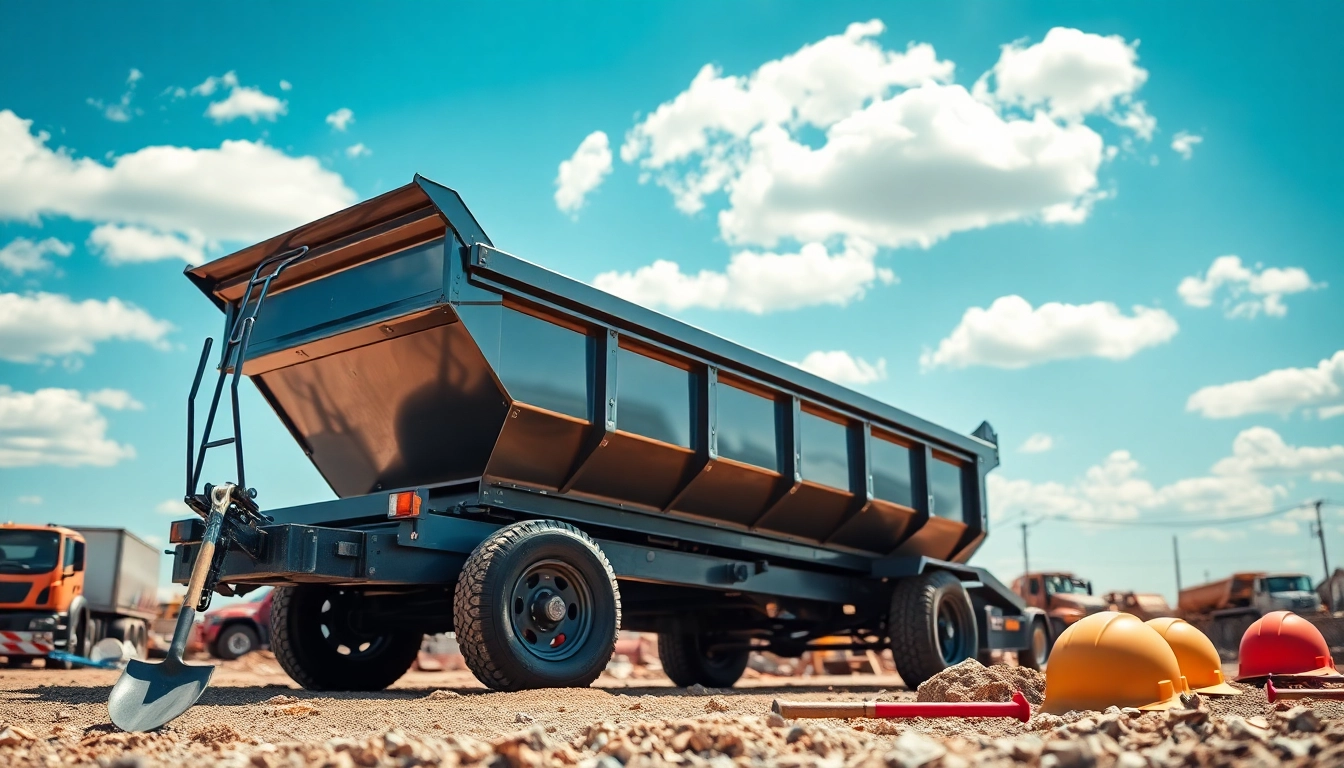
Understanding the Basics of Dump Trailers
What is a Dump Trailer?
A dump trailer is a versatile and powerful tool commonly used in construction, landscaping, and waste management. It is a heavy-duty trailer equipped with a hydraulic system that lifts one end of the trailer bed to unload materials. This simple yet effective mechanism allows for quick and efficient dumping of loads ranging from dirt and gravel to construction debris. The design of a dump trailer enables users to carry substantial loads while maintaining stability and ease of use. For those considering the utility of a dump trailer, understanding its components and functionality is crucial.
Key Features to Look For
Selecting the right dump trailer requires knowledge of its key features. Here are some essential aspects to consider:
- Hydraulic System: A reliable hydraulic system is vital for lifting heavy loads with ease. Look for trailers that feature powerful hydraulic cylinders.
- Material Construction: The construction material greatly influences durability. Steel frames are typically recommended for robust and reliable use.
- Bed Size: The dimensions of the trailer bed should align with your typical load requirements. Consider both length and width when making a choice.
- Weight Capacity: Ensure the trailer meets your load capacity needs. A higher weight rating provides more flexibility for various projects.
- Brake System: An efficient braking system is essential for safety, especially when dealing with heavy loads.
Common Uses of Dump Trailers
Dump trailers serve a multitude of purposes across different industries. Common uses include:
- Construction: Hauling sand, gravel, concrete, and equipment between job sites.
- Landscaping: Transporting soil, mulch, and other materials required for landscaping projects.
- Waste Removal: Efficiently transporting construction debris or other waste to disposal sites.
- Home Renovation: Facilitating the removal of old materials and transporting new supplies.
Types of Dump Trailers Available
Standard Dump Trailers
Standard dump trailers are the most common type and are designed for general purposes. They typically feature a straight frame and come in various sizes, making them suitable for numerous applications. Their hydraulic systems usually allow for straightforward operation, making them ideal for both professionals and DIY enthusiasts.
Tilt Trailers
Tilt trailers offer a unique design where the entire trailer bed tilts to a lower position to make loading easier. This feature is particularly beneficial for lightweight materials, such as mulch or gravel, allowing for seamless unloading without the need for a hydraulic lift. Tilt trailers are excellent for users who frequently need to load and unload materials.
Specialty Dump Trailers
Specialty dump trailers include various specific designs tailored for unique projects. Examples include trailers designed for hauling specific materials like scrap metal or those modified for heavy-duty tasks involving construction machinery. These trailers may come with additional features, such as reinforced frames or specialized loading systems, catering to niche market demands.
Factors Influencing Dump Trailer Selection
Load Capacity Considerations
When selecting a dump trailer, understanding load capacity is paramount. Load capacity indicates the maximum weight the trailer can safely transport, encompassing all materials, equipment, and the weight of the trailer itself. Ensuring that the trailer's load capacity aligns with your expected needs is crucial, as exceeding this limit can lead to safety and performance issues.
Materials and Construction Quality
The materials used in the construction of a dump trailer can significantly impact its lifespan and functionality. Steel and aluminum are the two primary materials found in dump trailers. Steel trailers offer enhanced durability and resistance to punctures but may be heavy, adding to overall weight. Aluminum trailers, while lighter, may not withstand heavy impacts as effectively as their steel counterparts. Your choice should be influenced by the nature of your projects and load types.
Price vs. Value Evaluation
While budget is often a determining factor in purchasing a dump trailer, evaluating value for money is equally essential. Cheaper trailers may lead to higher maintenance costs or limited capabilities in the long run. It's advisable to conduct thorough research, read reviews, and compare features of various models to identify a trailer that provides a strong balance between initial cost and potential long-term value.
Benefits of Using Dump Trailers
Increased Efficiency on Job Sites
Dump trailers streamline operations on job sites, enabling quick material transport and unloading. Their hydraulic lift systems eliminate the need for manual labor in unloading, saving time and reducing fatigue among workers. With the ability to transport larger loads, projects can proceed at a faster pace, ultimately increasing overall efficiency and productivity.
Versatility for Various Applications
One of the most significant advantages of dump trailers is their versatility. They can handle a range of materials and adapt to various job types—whether construction, landscaping, or waste management. This adaptability allows businesses to invest in a single piece of equipment that can serve multiple purposes, maximizing return on investment.
Cost-Effectiveness Over Time
Although the initial purchase price of a dump trailer can be substantial, the long-term savings are often significant. Their durability reduces the need for frequent replacements, and their efficiency translates to lower labor costs on job sites. Moreover, the capability of transporting larger loads in fewer trips can significantly save on fuel and time—a crucial factor in increasing profitability.
Maintenance Tips for Durability
Regular Inspection of Components
To enhance the lifespan of your dump trailer, regular inspections are critical. Check the hydraulic system, frame, tires, and electrical components for any signs of wear or damage. Routine maintenance can prevent minor issues from escalating into expensive repairs and ensure the trailer performs optimally throughout its use.
Preventive Maintenance Practices
Incorporate preventive maintenance practices, such as lubrication of moving parts, tightening loose bolts, and cleaning the trailer after use to remove debris and corrosive materials. Consider developing a maintenance schedule that aligns with usage patterns to ensure consistent care and prolong the trailer's operational life.
Signs Your Dump Trailer Needs Repair
Recognizing the signs of needed repairs can save both time and costs. Common indicators include unusual noises during operation, difficulty in lifting or lowering the bed, and visible signs of wear like cracks or rust. Addressing these issues quickly can help maintain performance and safety.
FAQs About Dump Trailers
What is the average lifespan of a dump trailer?
The average lifespan of a dump trailer typically ranges from 10 to 15 years with proper maintenance, depending on usage and construction quality.
Can I rent a dump trailer?
Yes, many companies offer dump trailer rentals, providing an excellent option for temporary projects without the commitment of purchasing one.
Do dump trailers come in different sizes?
Yes, dump trailers are available in various sizes, from compact models for small loads to larger trailers designed for heavy-duty tasks.
What maintenance is required for a dump trailer?
Essential maintenance includes regular inspections, lubrication of moving parts, tire checks, and ensuring the hydraulic system is in good condition.
Are dump trailers safe for heavy loads?
Dump trailers are designed to safely transport heavy loads, but it's crucial to adhere to the specified load capacity to ensure safety and performance.